

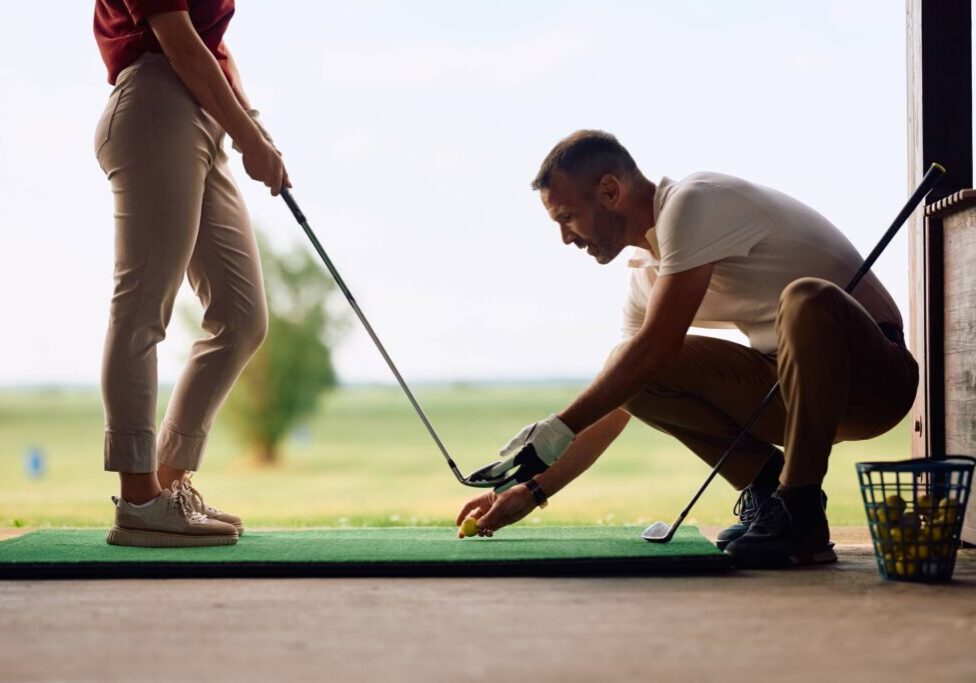
Starting golf can be exciting, but stepping onto a crowded outdoor driving range can feel intimidating for a new player. Concerns about missing the ball, looking inexperienced, or being watched can create performance anxiety before practice even begins. An indoor golf simulator provides a calmer first step. Much like an eye exam shows you where your vision stands before you navigate challenging terrain, a private simulator bay gives beginners immediate visual feedback on their swing mechanics without crowd scrutiny.
Start in a Controlled Environment
Outdoor ranges can be busy, noisy, and distracting. For beginners, those conditions can make it difficult to focus on grip, posture, alignment, tempo, and contact. A private simulator bay creates a more controlled setting where players can concentrate on fundamentals and repeat movements without feeling rushed.
This environment is not about avoiding real golf. It allows beginners to become familiar with basic movements before adding outdoor distractions. Players can repeat drills and make adjustments without worrying about how every shot looks to someone nearby.
Turn Every Shot Into a Learning Opportunity
A major advantage of an indoor golf simulator is the instant feedback available after each shot. Depending on the system, players can see information such as club speed, ball speed, launch angle, direction, and carry distance.
For a beginner, this data makes practice easier to understand. Instead of wondering why a shot went right or fell short, players can connect swing changes with measurable results. There is no need to analyze every number at once; a few basic measurements can reveal patterns and areas to improve.
This is part of the learning potential a golf simulator can provide: players can experiment, see the result, and make small adjustments in a low-pressure environment.
Build Repeatable Habits
Confidence comes from familiarity, and indoor practice can help beginners establish a simple pre-shot routine. That routine might include selecting a target, checking alignment, settling into a consistent setup, taking a practice motion, and committing to the swing.
Repeating those steps indoors makes them easier to remember later. When players eventually visit an outdoor range, the surroundings may be different, but their basic routine will already feel familiar.
That preparation can reduce performance anxiety. If grip, stance, alignment, club selection, and swing mechanics are all new at the same time, a crowded range can quickly become overwhelming. Indoor sessions allow beginners to work through those elements gradually.
Practice Without Fear of Embarrassment
Many new golfers worry that other people are watching their mistakes. Although most golfers are focused on their own practice, the feeling of being judged can still make a beginner tense.
A private simulator bay removes much of that pressure. Players can make mistakes, try different swings, and repeat drills without feeling exposed. That freedom encourages experimentation and helps beginners understand that poor shots are a normal part of learning.
Learning to respond calmly to mistakes is an important golf skill. Indoor practice gives new players room to develop that mindset before a busier outdoor setting.
Make the Outdoor Transition Easier
Once beginners have developed basic familiarity indoors, the outdoor driving range can feel much more approachable. The goal is not to arrive expecting perfect shots. It is to arrive knowing how to set up, follow a routine, and recognize common results from the swing.
Practical preparation also matters. Knowing what is involved in getting ready and packing for your indoor golf simulator session can make the first experience feel organized and purposeful.
Eventually, the outdoor range adds experiences a simulator cannot fully reproduce, including natural wind and real turf. Indoor practice simply creates a stronger starting point.
Build Confidence Before Adding Social Pressure
Golf is one of the best sports for networking because practice sessions and rounds naturally create opportunities to meet other people. Still, beginners do not have to develop their swing and social confidence simultaneously.
Starting indoors gives players space to establish their fundamentals first. Once they feel more comfortable with their swing, they can enjoy the social side of golf without feeling that every shot is a test.
Step Onto the Range With Confidence
Starting indoors is not about avoiding the outdoor driving range; it is about preparing for it. A private simulator provides controlled practice, instant feedback, and freedom from crowd pressure. Those advantages help beginners build baseline habits and understand their swing before adding the distractions of a busy range.
With that foundation in place, new golfers can step outdoors with greater confidence, a familiar routine, and a clearer sense of what they are trying to improve.