

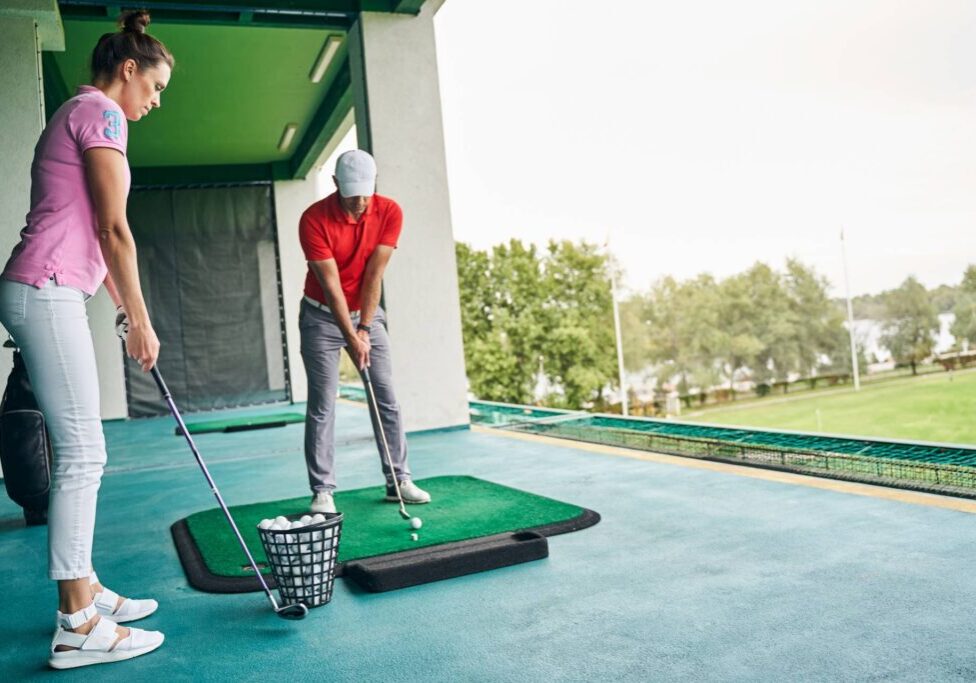
Distance control is one of the most elusive skills in golf. While crushing a drive gets attention, scoring consistently comes down to knowing exactly how far each shot travels. Today’s indoor golf simulator technology has changed the way players understand and refine this skill. By combining Doppler radar and high-speed photometric cameras, these systems deliver precise, data-driven insights that were once only available to professionals. The result? Golfers can now dial in their yardages with remarkable accuracy and confidence.
The Science Behind Simulator Precision
Modern simulators rely on two primary technologies: Doppler radar and photometric camera systems. Doppler radar tracks the golf ball in motion by emitting radio waves that bounce off the ball and return data about speed and trajectory. At the same time, high-speed cameras capture thousands of frames per second at impact, analyzing details like clubface angle and spin.
Together, these technologies provide a complete picture of tracking your ball flight. Key data points include:
- Ball speed: how fast the ball leaves the clubface
- Launch angle: the vertical angle at which the ball takes off
- Spin rate: the amount of backspin or sidespin influencing flight
By combining these variables, simulators calculate carry distance with exceptional accuracy. Unlike outdoor conditions, where wind, temperature, and turf can skew results, indoor systems isolate performance variables, making the data highly reliable.
Building a Precise Carry Matrix
One of the most valuable outcomes of simulator practice is the ability to build a “carry matrix.” This is essentially a personalized chart that shows exactly how far each club travels under consistent conditions.
Instead of guessing distances or relying on occasional good shots, players can hit 20, 50, or even 100 balls with the same club to establish true averages. This process highlights:
- Consistent carry yardages for each club
- Overlaps or gaps between clubs
- Variability in strike quality
When you customize your practice sessions around this data, you begin to see patterns emerge. For example, you might discover that your 7-iron and 8-iron carry distances are too close together, indicating a gap elsewhere in your set. Or you may find that partial wedge shots lack consistency, revealing an opportunity for focused improvement.
Mastering the 30-to-100-Yard Range
For many amateur golfers, the scoring zone is where rounds are won or lost. These shots require finesse, not power, and are notoriously difficult to judge.
An indoor golf simulator excels in this range because it allows for controlled repetition. Instead of guessing how far a half-swing wedge travels, you can measure it precisely. By hitting multiple shots at different swing lengths—quarter, half, and three-quarter—you create a detailed map of your short-game distances.
This level of insight transforms uncertainty into confidence. You’re no longer estimating; you’re executing based on data. Over time, this builds a reliable system for selecting the right swing and club for any distance within that critical range.
The Power of Controlled Practice
One of the biggest advantages of simulator training is the environment itself. Practicing indoors eliminates distractions like wind, uneven lies, and inconsistent weather. Every shot is performed under the same conditions, making it easier to focus on mechanics and outcomes.
More importantly, the ability to hit 100 repeatable shots in a single session accelerates improvement. Repetition is essential for building muscle memory, and simulators make it efficient and measurable. You can immediately see how small adjustments affect ball flight, reinforcing positive changes.
This is why practicing on a golf simulator can improve your golf game so effectively. The feedback loop is instant, objective, and consistent—three elements that are difficult to replicate on a traditional driving range.
Data-Driven Confidence on the Course
Simulator data doesn’t just stay indoors—it translates directly to on-course performance. When you know your exact carry distances, you approach each shot with greater clarity. There’s less second-guessing and more commitment.
Visual confidence also improves. After seeing hundreds of shots fly the same distance on a screen, your brain begins to trust that outcome. This mental reinforcement is just as important as the physical repetition, helping you execute under pressure.
Maintaining Energy During High-Rep Sessions
Long simulator sessions can be physically and mentally demanding. Staying focused through dozens—or even hundreds—of swings requires consistent energy levels. Some players incorporate recovery strategies, such as hydration routines or wellness practices like IV therapy, to help maintain stamina during extended practice periods. While approaches vary, the goal is the same: sustaining performance and concentration throughout the session.
The modern indoor golf simulator has redefined how players approach distance control. By leveraging advanced tracking technology, golfers can build precise carry matrices, identify gaps in their game, and master challenging scoring shots. Combined with the benefits of a controlled environment and high-repetition practice, these tools offer a powerful path to improvement.